Aedes aegypti

Home / History

From a clay pot in the Sahel to every port in the Americas.

The story of Aedes aegypti follows human history closely: drought, the slave trade, colonial ports, a nearly successful war against it, and the reasons it came back.

Stage I · Origin

A forest insect makes
a bargain with drought.

Every Aedes aegypti alive today descends from an African forest mosquito, Ae. aegypti formosus. It was a generalist that bred in tree holes and rock pools and bit whatever animal wandered past.

Then the climate turned. As the African Humid Period ended about 5,000 years ago, the Sahara dried into desert and the Sahel settled into long, harsh dry seasons. Whole-genome analysis dates the split of the human-specialist lineage to almost exactly this moment. When standing water vanished for months at a time, one reliable source remained: the where people stored water.

The mosquitoes that learned to breed in those vessels, and to prefer the people who filled them, gained a year-round nursery. Their taste for human blood came along with living beside humans.
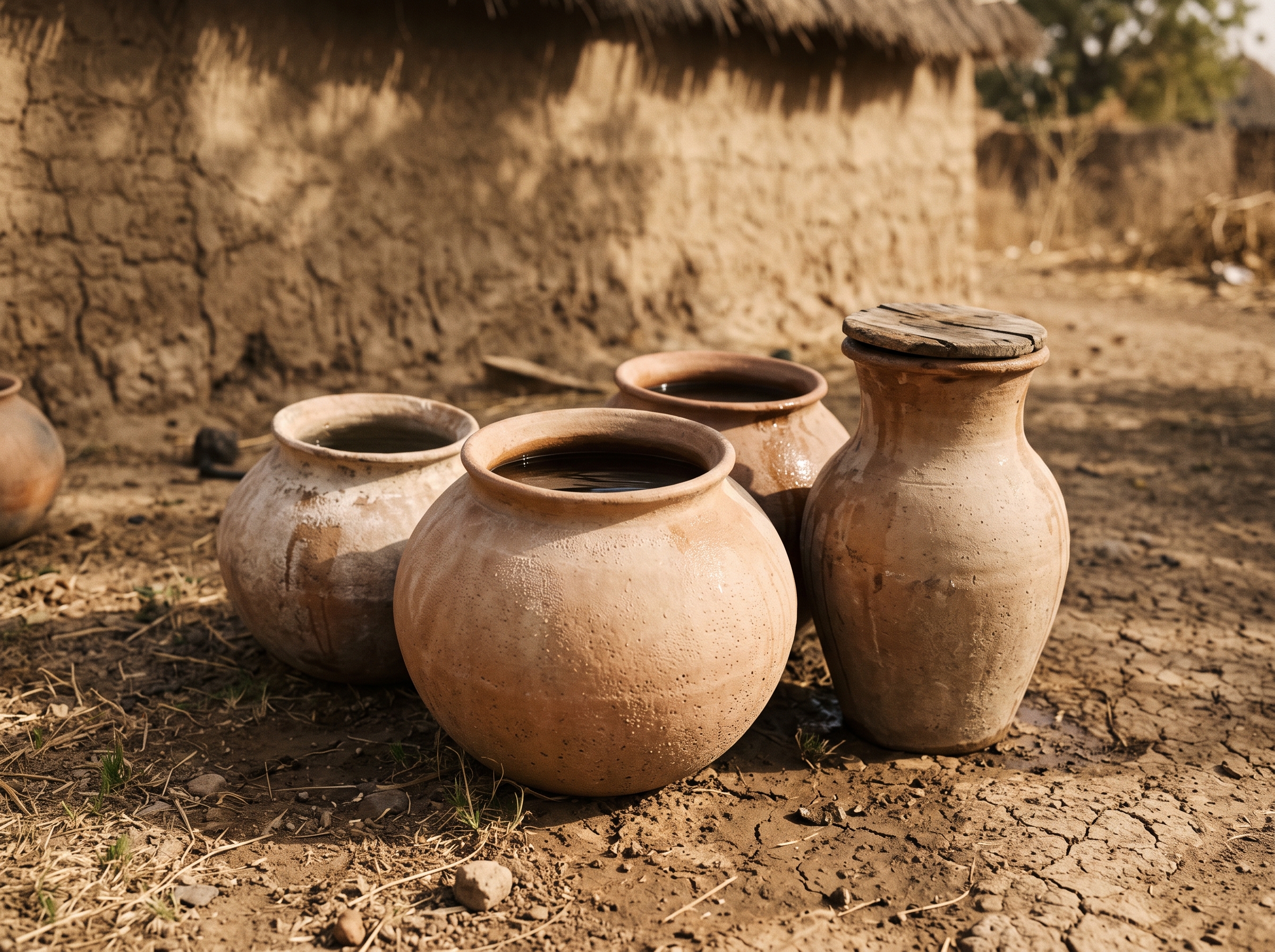
Terracotta water-storage vessels holding still water beside a mud-brick wall in a drying Sahel village, the breeding niche that drove Aedes aegypti's specialization on humans
The human-stored water niche, c. 3000 BCE
5,000 yrDivergence from generalists
SahelWest African cradle
Clay potsThe original habitat
♀ onlyOnly females bite
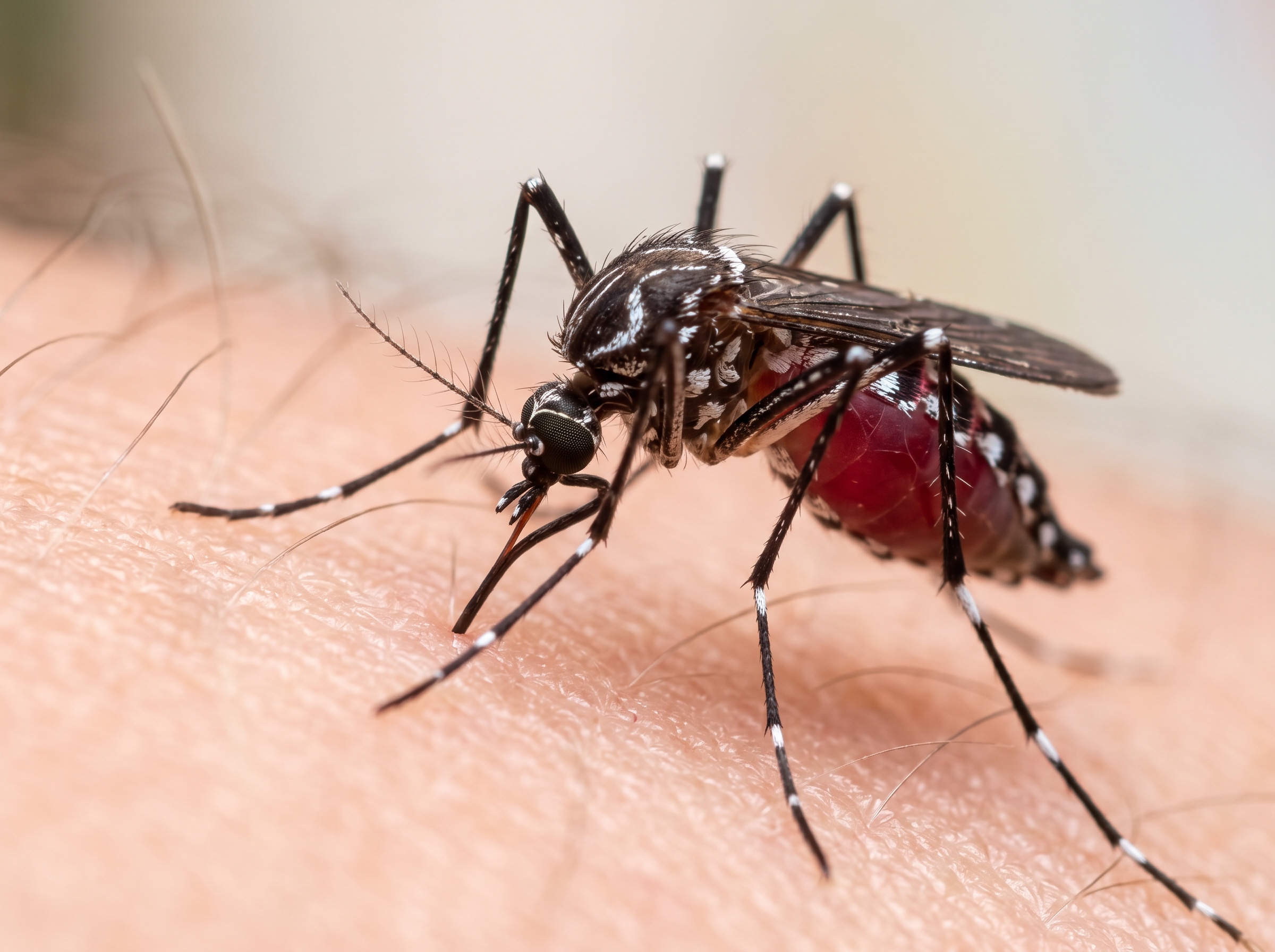
Macro photograph of a female Aedes aegypti feeding on human skin, its abdomen swollen with blood, showing the lyre-marked thorax and white-banded legs
Vector competence, up close

Why it matters

Specializing on humans made it a better carrier.

Living with people changed more than where the mosquito bred. It also made it a better disease carrier. Human specialists prefer to bite people, feed indoors, take frequent small blood meals from several people, and breed in the containers that cluster around towns. Each trait raises its vectorial capacity, the likelihood that its bites will pass a virus from one person to the next.

A mosquito that bites one person, rests on a wall, and then bites another is a far better bridge for a virus than a forest insect that mostly feeds on antelope. See how it hunts →

Stage II · History

Carried in barrels,
it crossed an ocean.

The mosquito's spread closely follows human movement. Its most important journey was aboard the ships of the Atlantic slave trade, and it changed the history of the Americas.

c. 3000 BCE · West Africa

The human-specialist lineage emerges

As the Sahel dries, Ae. aegypti aegypti splits from its forest ancestor, breeding in human water stores and preferring human hosts.

1500s–1600s · The Middle Passage

Passage in the water casks

Slave ships carried for months-long voyages, which made perfect floating nurseries. Eggs and larvae crossed the Atlantic this way and settled in the port cities of the New World, roughly 400–550 years ago.

1647–1648 · Barbados, Guadeloupe, Yucatán

Yellow fever arrives

The first probable yellow fever epidemics in the Americas break out in the Caribbean and Mexico, where Maya chroniclers called it xekik, "black vomit". The mosquito was already there, ready to spread the virus.

1793 · Philadelphia

A capital emptied

Yellow fever kills about a tenth of Philadelphia, then the US capital. The government flees the city. Outbreaks keep striking Atlantic ports for another century, including New Orleans in 1853, and reach Barcelona (1821) and Lisbon (1857) after the mosquito establishes itself around the Mediterranean.

1869–1900 · Suez to Asia

Steamships widen the map

The Suez Canal opens in 1869 and the mosquito is recorded in Asia by the 1870s. It reaches Australia and Hawaii (c. 1892) soon after. Genomics now suggests most invasive populations worldwide descend from the American branch.

1881–1906 · Cuba & Panama

The carrier is proven

Carlos Finlay proposed it, and Walter Reed's commission confirmed in 1900, that a mosquito, not "bad air", carried yellow fever. Mosquito control, not medicine, is what finally made it possible to build the Panama Canal.

Stage III · The war on the mosquito

We nearly won.
Then we stopped.

In 1947 the Pan American Health Organization launched a campaign to eradicate Aedes aegypti from the entire Western Hemisphere.

Teams inspected house after house, emptying containers and spraying DDT. It worked. In 1958 PAHO certified 11 countries and territories free of the mosquito, and by 1962 more than 20, including Brazil, Bolivia, Peru, Paraguay, Uruguay, Ecuador, Panama and all of Central America. Around the same time, the mosquito disappeared from the Mediterranean and shrank back to Queensland in Australia.

The holdouts kept re-seeding everyone else. The United States began its own program only in 1964 and abandoned it in 1969 after spending about $56 million. Through the 1970s–90s, as budgets and attention faded, the mosquito reclaimed nearly every country it had lost.

1947

Campaign launched

PAHO commits the Americas to eradication.

1958–1962

20+ countries certified free

Brazil is declared free in 1958.

1969

US program abandoned

Lack of funding and political will.

1976–1997

Reinfestation

Brazil (1976), Bolivia (1980), Peru (1984), Argentina (1986), Uruguay (1997)…

1981

Dengue turns deadly

Cuba suffers the first major dengue hemorrhagic fever epidemic in the Americas.

Stage IV · Still evolving

Evolution isn't
ancient history.

Genomes from 1,206 mosquitoes, published in Science in 2025, show something new: American-lineage mosquitoes are now migrating back into Africa. They bring insecticide resistance and a stronger preference for human blood into cities that have had recent dengue outbreaks.

Rapid urban growth in West Africa is also pushing local mosquitoes toward human-specialist genetics. The forces that created this mosquito 5,000 years ago, water storage and crowded human settlements, are still at work today.

Ada, the talking mosquito

“My family went from Africa to the Americas, then around the world. Now some of us are flying home.”

Ada · Aedes aegypti

Back← Home
Next chapterWatch the spread on the map →